
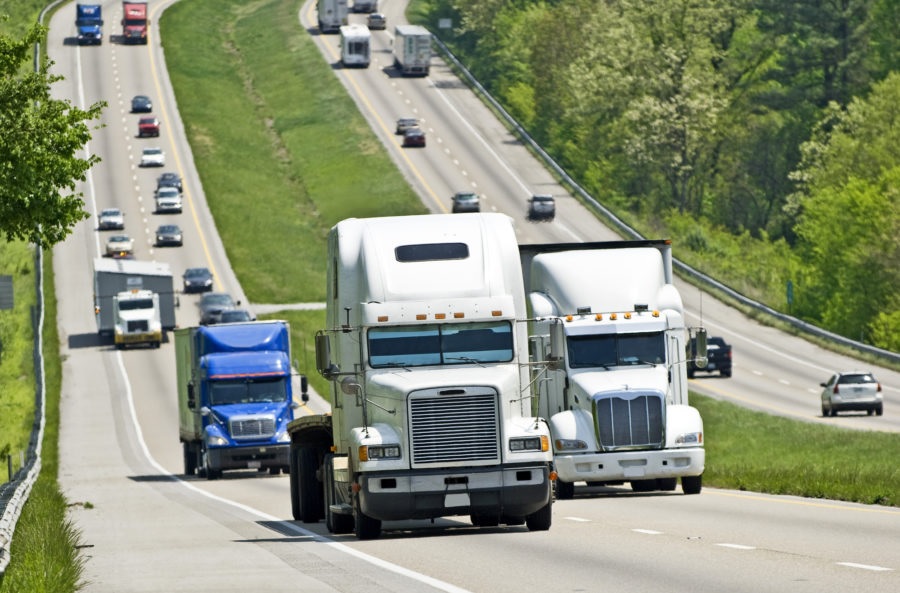

Cruising down a multi-lane interstate highway under a clear sky is a routine experience for millions of American drivers. Yet, dominating these concrete arteries alongside standard passenger sedans and compact SUVs are heavy-duty commercial semi-trucks and massive oversized transport vehicles. Weighing up to eighty thousand pounds or more under federal regulations, a fully loaded tractor-trailer is a monumental piece of kinetic energy. When you share the highway with these commercial giants, standard driving habits are no longer enough to guarantee your safety.
Unfortunately, passenger vehicle drivers often exhibit a fundamental misunderstanding of how commercial trucks operate, how they handle physics, and where their operational blind spots lie. Aggressive cutting off, tailgating, and driving in established danger zones account for a staggering number of highway accidents each year. Navigating past these commercial rigs safely requires more than just defensive driving; it demands an appreciation of the unique challenges professional truck drivers face behind the wheel. By mastering the dynamics of heavy transport vehicles and learning how to maneuver around them with calculated precision, you can dramatically reduce your risk and ensure a stress-free journey.
Understanding the Physics of Heavy Transport
The most dangerous misconception a motorist can hold is treating a semi-truck as if it were simply a large car. The physical laws governing an eighty-thousand-pound vehicle are entirely different from those acting upon a three-thousand-pound sedan, and these differences dictate how you must behave in traffic.
Stopping Distance and Braking Realities
When traveling at highway speeds, a fully loaded commercial truck requires a significantly greater distance to come to a complete stop than a passenger car. While a modern sedan can brake aggressively and halt in a relatively short distance, a heavy semi-truck needs the length of multiple football fields to shed its immense momentum.
This stark reality makes tailgating a semi-truck a catastrophic mistake. If traffic abruptly slows down ahead and you are riding closely behind a tractor-trailer, you leave yourself zero safety buffer. Furthermore, if you make the mistake of aggressively cutting in front of a semi-truck and slamming on your brakes to make an exit, the truck driver cannot physically stop in time to avoid crushing your vehicle. Respecting the massive braking distance of commercial trucks is the single most important rule of highway safety.
Momentum and Uphill Gradients
Gravity plays a massive role in commercial transport operations. When approaching an uphill grade on a highway, fully loaded semi-trucks rapidly lose momentum because their high-torque diesel engines can only pull so much weight against gravity. Motorists often grow impatient, tailgating trucks up inclines or weaving aggressively through traffic to get around them. Maintaining patience on upgrades prevents sudden lane-change collisions and allows commercial drivers to maintain steady control of their heavy rigs.
Navigating the Danger Zones: Understanding Blind Spots
Every vehicle on the road has blind spots, but the blind zones surrounding a tractor-trailer are massive, highly hazardous areas where the driver literally cannot see you. These zones are commonly referred to by professional drivers as the no-zones.
The Dreaded Right-Side Blind Spot
Many drivers assume that a truck’s blind spots are equal on both sides, but the right-side blind spot is exponentially larger than the left. Because the driver sits on the left side of the cab, the physical structure of the trailer creates a massive wedge-shaped danger zone that extends across multiple lanes to the right, stretching from just behind the cab all the way to the rear of the trailer. Never cruise alongside a semi-truck on the right side. If you need to pass, do so efficiently on the left and clear the truck completely before returning to your lane.
The Immediate Rear and Front Zones
Following directly behind a semi-truck creates a double hazard. Not only does it obliterate your forward visibility—preventing you from seeing debris, accidents, or brake lights ahead on the road—but it places you directly in the truck’s rear blind spot. If you cannot see the truck’s exterior side mirrors, the driver cannot see you in their mirrors.
Conversely, tailing too closely or cutting immediately in front of the truck’s front bumper is equally perilous. The front blind spot of a semi-truck extends twenty feet forward from the bumper because the cab sits elevated high above the road. If you merge into that space too closely after passing, the truck driver will completely lose sight of your car.
The Art of Safe Passing Maneuvers
Executing a passing maneuver around a commercial truck requires confidence, patience, and impeccable timing. Hesitation in a truck’s blind spot is where many accidents occur.
When preparing to pass a semi-truck, position your vehicle far enough back so that you have an unobstructed view of the road ahead and the truck’s side mirrors. Signal your intent clearly, check your blind spots, and accelerate smoothly into the passing lane. Never linger in the adjacent lane next to a semi-truck. Pass with steady acceleration, and do not pull back into the right lane until you can see the entire front grill of the truck in your rearview mirror.
Additionally, be mindful of aerodynamic wake and crosswinds. Massive commercial trucks push a tremendous wall of air ahead of them and create a powerful vacuum behind and alongside their trailers. When you pass a semi-truck at high speeds, you may feel your car gently pull toward or push away from the rig due to this displaced air. Maintaining a firm, two-handed grip on your steering wheel ensures you remain completely stable during the pass.
Sharing the Road with Oversized and Wide Loads
While standard semi-trucks present their own challenges, sharing the highway with oversized and superload transports introduces an entirely new level of roadway complexity. These specialized commercial vehicles haul massive industrial equipment, wind turbine blades, prefabricated modular buildings, and heavy construction machinery that exceed standard legal width, height, and weight limits.
Deciphering Escort Vehicles and Signage
Oversized loads are almost universally accompanied by professional escort vehicles—commonly known as pilot cars—equipped with flashing amber or yellow strobe lights, high-visibility banners reading “Oversized Load” or “Wide Load,” and rooftop warning signs. These pilot cars act as an advance warning system for the motoring public.
If you see a pilot car approaching with flashing lights, or if you encounter a convoy escorting a wide load on a two-lane highway, you must exercise extreme caution. Escort drivers will occasionally use their vehicles to slow traffic or temporarily halt vehicles to allow the massive transport rig to safely navigate a tight intersection or a narrow bridge. Never attempt to squeeze past an oversized load on a shoulder or pass a pilot car when they are actively managing traffic flow.
Giving Wide Rigs Extra Room on Turns
One of the most common hazards involving oversized loads occurs at city intersections and highway off-ramps. Because of their immense length and wide wheelbases, semi-trucks and oversized transporters cannot execute standard square turns.
To make a right-hand turn, a heavy truck must often swing wide to the left before initiating the turn, creating a wide gap between the right side of the truck and the curb. Inexperienced drivers frequently make the fatal mistake of seeing that open gap on the right and trying to squeeze their car through it. As the truck begins its turn, the trailer sweeps across that exact space, crushing any vehicle caught in the gap. Never pull up beside a large truck that is signaling a right turn. Wait patiently behind the rig and allow it ample space to complete its sweeping maneuver safely.
Sharing the road with commercial trucks and oversized transports does not have to be an intimidating experience. By understanding the physical limitations of heavy vehicles, respecting their massive blind spots, executing smooth passing maneuvers, and giving wide loads the room they need to operate, you transform yourself from an anxious motorist into a skilled, defensive driver. Professional truck drivers are the backbone of the American supply chain, working long hours to keep commerce moving. By extending them patience and road space, we ensure that everyone makes it home safely at the end of the journey.

Comments are closed.