

For more than a century, the manual transmission stood as the undisputed centerpiece of the driving experience. Operating a stick shift meant possessing a tangible mechanical skill. You had to master the delicate interplay between the clutch pedal, the throttle, and the shifter knob, transforming yourself into an active participant in the vehicle’s propulsion rather than a passive passenger. For driving enthusiasts, the manual gearbox was a symbol of control, engagement, and a purist connection to the machine.
Today, that mechanical bond is rapidly disappearing from showroom floors. Walking down the sales lot of almost any major automaker reveals a stark reality: the traditional stick shift has been pushed to the absolute brink of extinction. Models that once proudly offered manual transmissions as standard equipment now come exclusively with automatics or advanced dual-clutch setups. This quiet disappearance is not the result of a sudden whim by car manufacturers. Instead, it is the culmination of decades of engineering evolution, shifting consumer demands, and economic realities that have rendered the manual transmission obsolete for the mass market.
The Technological Triumph of the Modern Automatic
The primary driver behind the decline of the manual transmission is the undeniable superiority of modern automatic gearboxes. Decades ago, choosing an automatic meant sacrificing performance, fuel economy, and driving pleasure. Early automatics featured sluggish torque converters, suffered from parasitic power loss, and offered only three or four gears, leaving engines struggling in suboptimal power bands and burning excess fuel.
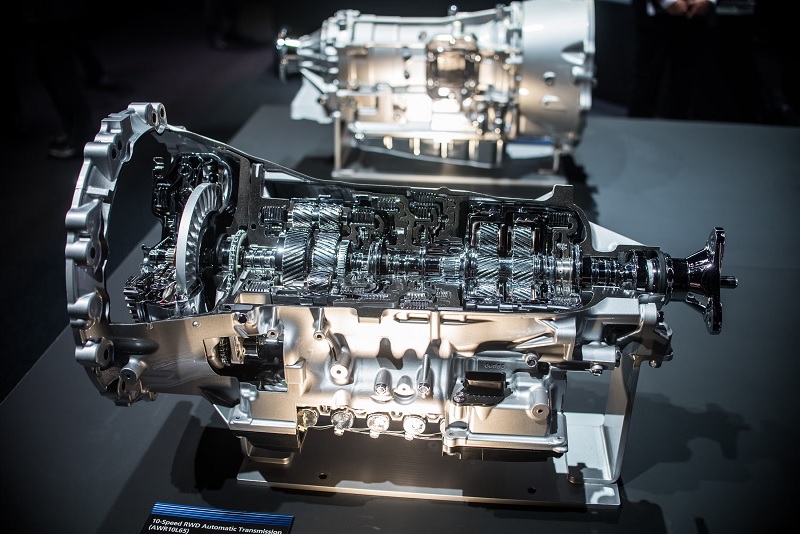
Engineering advancements completely flipped this dynamic. Modern torque-converter automatics now feature eight, nine, or even ten distinct speeds, keeping the engine operating at its absolute peak thermal and mechanical efficiency at any given velocity. Furthermore, the advent of the dual-clutch transmission introduced computer-controlled gear changes that execute shifts in milliseconds—speeds that no human foot and hand coordination could ever replicate.
When a computer can shift gears faster than a professional race car driver while simultaneously maximizing fuel economy and lowering emissions, the traditional manual transmission loses its technical justification. Automatic transmissions are no longer the sluggish compromise they once were. They are faster, smoother, and objectively more efficient than their manual counterparts.
Efficiency, Emissions, and the Regulatory Pressures
In the modern automotive landscape, government regulations and environmental standards dictate vehicle design more than almost any other factor. Automakers face punishing penalties if their corporate average fuel economy targets are not met, and every single gram of carbon dioxide emitted matters immensely.
Herein lies one of the most surprising ironies of modern automotive engineering: the manual transmission is no longer the king of fuel efficiency. While older manuals routinely outperformed older automatics in miles per gallon, modern computer-managed multi-speed automatics and continuously variable transmissions optimize gear ratios with mathematical precision. They constantly adjust to engine load in ways a human driver simply cannot anticipate.
Because emissions testing and fuel economy ratings are conducted under strict, standardized laboratory cycles, automated transmissions consistently secure better ratings than manual gearboxes. To satisfy stringent regulatory requirements and avoid massive financial penalties, automakers are heavily incentivized to phase out manual transmissions across their entire lineups.
The Rise of Electric Vehicles and the Death of Gears
While internal combustion engines provided a long, gradual decline for the manual transmission, the rise of the electric vehicle is delivering the final, definitive blow. Electric motors operate on an entirely different physical paradigm than gasoline engines. They produce maximum torque instantly from zero RPM and can spin efficiently up to terrifyingly high rotational speeds without requiring a complex array of mechanical gear ratios.
Most electric vehicles utilize a simple single-speed direct drive transmission. Because an electric motor does not idle, stall, or bog down under load, a traditional gearbox is entirely unnecessary. As governments worldwide push toward electrification and major automakers commit to phasing out internal combustion engines entirely over the coming decades, the very concept of shifting gears is destined to become a historical footnote. There is simply no mechanical place for a clutch pedal in an electric vehicle.
Shifting Consumer Demographics and Preferences
Beyond engineering and regulation, the death of the stick shift is heavily driven by basic consumer demand. Driving habits, urban infrastructure, and cultural attitudes toward automobiles have transformed dramatically over the past generation.
The Urban Commute and Congestion
For millions of drivers, the daily commute involves sitting in agonizing, bumper-to-bumper traffic for hours on end. In heavy stop-and-go congestion, operating a manual transmission transforms from an engaging driving experience into an exhausting physical chore. Constantly depressing a heavy clutch pedal, shifting between first and second gear, and riding the brakes wears down even the most dedicated enthusiasts. The overwhelming majority of modern car buyers prioritize comfort, relaxation, and ease of operation, making the automatic transmission an effortless default choice.
The Loss of Institutional Knowledge
Driving a manual transmission has effectively transitioned from a universal life skill into a niche, specialized hobby. Decades ago, teenagers learned to drive on beat-up manual sedans out of necessity. Today, driver’s education fleets consist almost entirely of automatic vehicles equipped with advanced driver-assistance systems. Because young drivers are rarely exposed to stick shifts, a massive generational gap has emerged. When buyers do not know how to drive a manual, they naturally refuse to purchase one, further shrinking the addressable market for automakers.
The Last Bastion: Enthusiast Cars and Niche Markets
While the mass-market commuter car has completely abandoned the manual transmission, a fascinating subculture continues to keep the stick shift on life support. High-performance sports cars and specialized enthusiast models represent the final refuge for the manual gearbox.
Automakers like Porsche, BMW M, and Cadillac have discovered that a dedicated core of driving purists will pay a premium for the tactile engagement of a manual shifter. For these buyers, performance figures on a spreadsheet matter less than the emotional connection of nailing a heel-toe downshift entering a corner. In this specialized market segment, the manual transmission has evolved from a cheap, utilitarian base-model feature into an exclusive, premium option reserved for weekend toys and track-day specials.
However, even this stronghold is shrinking. Modern sports cars equipped with paddle shifters post significantly faster acceleration times and lap records than their manual counterparts. As the pool of enthusiast buyers ages and younger generations embrace electric performance vehicles, even high-end sports car manufacturers are slowly phasing out the third pedal.
The fading away of the manual transmission marks the end of an era in automotive history. It closes the chapter on a mechanical interface that defined how humans interacted with machines for over a century. While the rise of hyper-efficient automatics and electric powertrains makes this transition logical from an engineering and economic standpoint, the loss of the stick shift represents a quiet cultural shift. As autonomous systems and computerized drivetrains take complete control of our vehicles, the art of shifting gears will soon pass from a daily reality into the realm of nostalgia, preserved only by collectors, historians, and dedicated driving purists.

Comments are closed.