
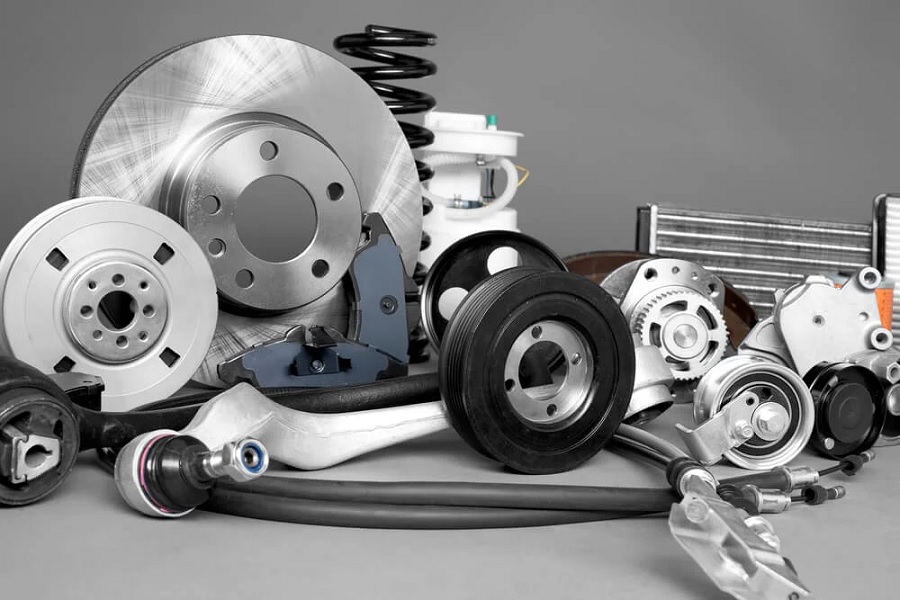

Anyone who has ever faced an unexpected car repair bill has likely experienced a moment of profound shock when comparing parts estimates. Walking into a repair shop or browsing an online catalog reveals a stark financial divide: aftermarket replacement parts are frequently a fraction of the cost, while Original Equipment Manufacturer, or OEM, parts command a steep premium. To the average car owner, this price disparity often feels like an arbitrary markup, a corporate cash grab engineered by automakers to exploit drivers who need their vehicles fixed.
However, the reality behind automotive pricing is far more complex than simple corporate greed. The economics of replacement parts involve a massive web of intellectual property rights, rigorous testing protocols, precision manufacturing, and complex supply chain logistics. Understanding why OEM replacements cost significantly more requires peeling back the layers of the global automotive manufacturing industry to see what actually goes into producing a part that bears a carmaker’s brand name.
The Design and Intellectual Property Burden
The financial journey of an OEM part does not begin on a factory assembly line; it starts years earlier in the research and development departments of a major automaker. When a new vehicle model is designed, every single component, from the engine block to the smallest plastic dashboard clip, must be engineered, tested, and refined to fit that specific platform.
Automakers pour billions of dollars into research and development, safety testing, and compliance validation. This enormous financial burden must be recovered across the lifespan of the vehicle. When you purchase an OEM part, a portion of your money is directly subsidizing the intellectual property and engineering hours that went into designing that component in the first place.
Aftermarket manufacturers, by contrast, operate on an entirely different economic model. They rarely design parts from scratch. Instead, once an automaker releases a vehicle and its components into the wild, aftermarket companies reverse-engineer the existing part. They do not carry the initial burden of crash-testing a chassis, wind-tunnel testing an aerodynamic body panel, or spending years perfecting a proprietary electronic sensor. Because their overhead costs are a fraction of the original creator’s, aftermarket brands can comfortably sell their components at a lower price point while still turning a healthy profit.
Precision Manufacturing and Tolerance Levels
One of the most compelling arguments for OEM parts is the concept of exact fitment, and achieving that level of precision requires expensive manufacturing standards. When an automaker contracts a supplier to build a water pump, an alternator, or a suspension arm, those parts are built to strict factory tolerances measured in microscopic increments.
OEM parts are manufactured on the exact same assembly lines, using the same tooling and materials, as the components originally installed in the car when it rolled off the assembly floor. This guarantees seamless integration. A technician can pull an OEM replacement part out of its box, bolt it into place, and know with absolute certainty that every bolt hole, electrical connector, and fluid passage will line up precisely as intended.
Aftermarket parts, particularly budget-tier options, often cast a wider net in their manufacturing tolerances to keep production costs low. While a cheaper alternator might function adequately, minor variations in its casing or internal winding can lead to installation headaches, premature wear, or compatibility issues with the vehicle’s computer systems. Premium aftermarket brands do bridge this gap by producing parts that meet or exceed OEM specs, but they must still invest heavily in quality control, which is why high-end aftermarket parts are often priced closer to OEM levels.
The Liability and Warranty Ecosystem
The automotive industry is one of the most litigious sectors in the global economy, and the shadow of product liability hangs heavy over every component that enters the market. Automakers face immense financial exposure if a defective part leads to an accident, injury, or catastrophic engine failure.
To mitigate this risk, OEM parts undergo exhaustive durability testing under extreme environmental conditions, ranging from sub-zero Arctic testing grounds to blistering desert heat. They are subjected to rigorous stress tests to ensure they will perform reliably for hundreds of thousands of miles, mirroring the expected lifespan of the vehicle.
Furthermore, OEM parts typically come with a robust factory-backed warranty that is honored at dealerships nationwide. If an OEM part fails prematurely, the manufacturer generally covers not just the replacement component, but the labor costs associated with installing it. The high cost of OEM parts includes an insurance buffer designed to absorb the financial impact of warranty claims and liability protection. Cheaper aftermarket alternatives often carry limited warranties that cover only the part itself, leaving the consumer entirely on the hook for expensive shop labor if the replacement component fails a month after installation.
Supply Chain Realities and Dealership Networks
Logistics play a massive role in the final retail price of any automotive component. The supply chain that delivers an OEM part to a local dealership is a finely tuned, highly specialized machine designed for speed and precision, but it is fundamentally expensive to maintain.
Dealerships must stock thousands of unique parts to service everything from current model-year vehicles to cars that went out of production a decade ago. Maintaining this extensive inventory requires massive warehouse space, sophisticated tracking software, and complex distribution networks. Additionally, automakers protect their brand equity through exclusive distribution channels. Because dealership service departments are the primary authorized outlets for OEM components, market forces that typically drive down prices through open competition are heavily blunted.
The aftermarket ecosystem operates with vastly different economies of scale. Massive third-party distributors supply generic parts to thousands of independent repair shops and retail auto parts chains across the country. High volume, fierce competition among competing brands, and streamlined logistics allow aftermarket parts to move through supply chains at a much lower cost per unit.
Deciding When the Premium is Worth It
Given the stark price differences, car owners are naturally left wondering whether OEM parts are always a mandatory purchase or if they are simply an expensive luxury. The answer depends heavily on the specific system being repaired.
For critical mechanical systems, complex electronics, safety equipment, and components deeply integrated with the vehicle’s onboard computer network, OEM replacements are frequently the safest and most reliable choice. Modern vehicles rely on delicate electronic handshakes between modules, and cheap aftermarket sensors can trigger persistent dashboard warning lights or erratic performance.
Conversely, for routine maintenance items and consumable components like brake pads, windshield wipers, cabin air filters, and spark plugs, high-quality aftermarket alternatives often match or exceed the performance of original factory parts at a fraction of the cost.
Ultimately, the high cost of OEM replacements is the price of admission for guaranteed precision, extensive research, and comprehensive liability protection. Understanding the economic forces driving these prices empowers vehicle owners to make informed, pragmatic decisions the next time their car needs a repair.

Comments are closed.